
Crawlspace Encapsulation That Keeps Moisture Out for Good
A wet crawlspace doesn't stay in the crawlspace. Moisture, mold, and cold air work their way up into your living space. Morgan seals it off completely with a written proposal and a warranty that lasts.
The Morgan Standard
A written proposal at every inspection. A dry, sealed crawlspace when we're done. A warranty that transfers if you sell your home.
Most crawlspaces in the Delaware Valley weren't built to handle what they're up against. Concrete block foundations, exposed dirt floors, and minimal ventilation create the right conditions for moisture, mold, and wood rot; sometimes for years before a homeowner notices.
Encapsulation fixes that. We seal the floor, walls, and any penetrations with a heavy-duty vapor barrier, then address any existing moisture or mold before closing everything up. The result is a crawlspace that stays dry year-round.
What Crawlspace Encapsulation Includes
A complete system, not just a plastic sheet
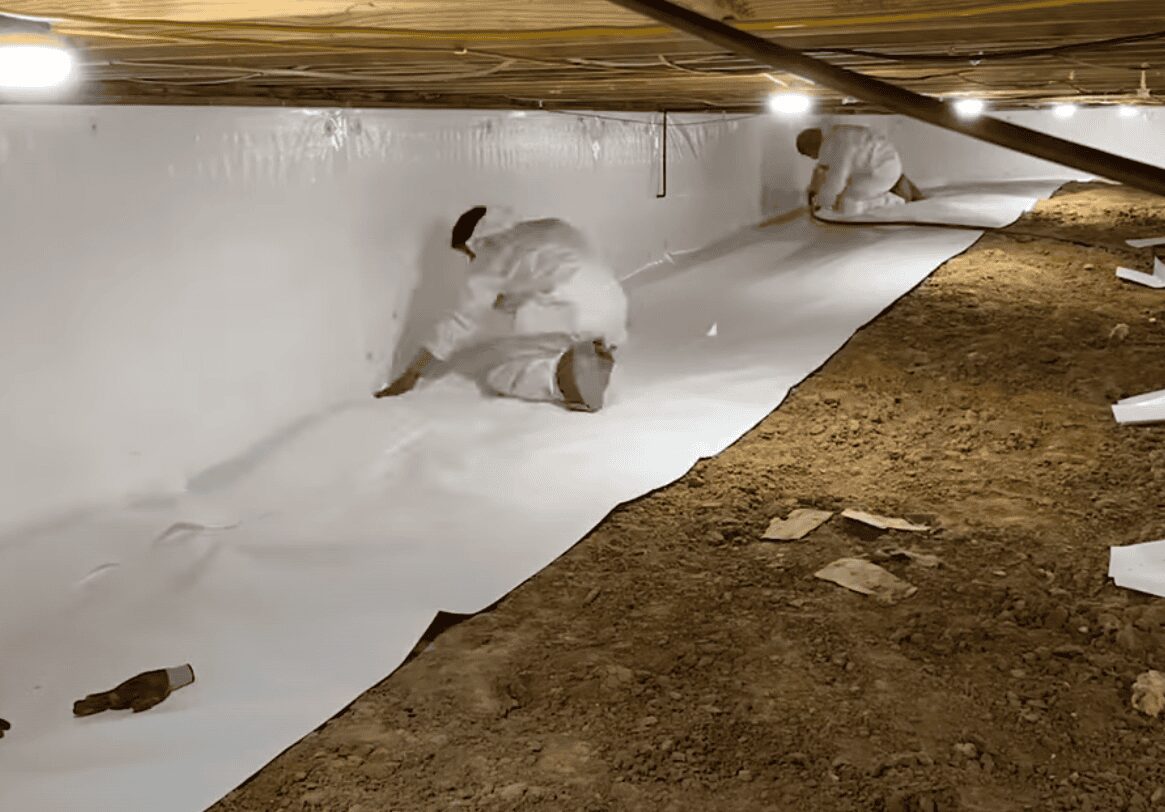
A proper encapsulation job covers every surface moisture can enter through. Here's what Morgan installs:
Vapor Barrier: A thick, reinforced liner covers the entire crawlspace floor and runs up the walls, sealed at seams and penetrations. We use commercial-grade material, not the thin sheeting sold at hardware stores.
Wall and Rim Joist Sealing: Open block walls and rim joists are major entry points for cold air and moisture. We seal them as part of every encapsulation job.
Drainage and Sump (where needed): If standing water or active seepage is present, we address it before encapsulating. Sealing over a wet crawlspace only traps the problem.
Humidity Control: An encapsulated crawlspace needs controlled ventilation to stay dry long-term. Depending on your setup, we'll recommend a dehumidifier or an E-Z Breathe ventilation system to maintain the right conditions after the job is done.
Why the Crawlspace Matters More Than You Think
What happens down there affects what happens up here
Air moves upward through a house. Whatever is in your crawlspace (moisture, mold spores, cold air, odors...) eventually makes its way into your living space. Homeowners often trace musty smells, high heating bills, or allergy flare-ups back to a crawlspace problem they didn't know they had.
Encapsulation addresses the source, not the symptom.

Signs Your Crawlspace Has a Moisture Problem

- Musty smell in the first floor or main living area
- Visible mold or white efflorescence on foundation walls
- Wood rot or soft spots in joists or subfloor
- High humidity levels in the home, especially in summer
- Increased heating or cooling costs
- Standing water or damp soil after rain
If you're seeing more than one of these, moisture is already doing damage you may not be able to see yet.
Why does my crawlspace matter if I never go in it?
The air in your crawlspace doesn't stay there. It migrates upward through the floor into your living space. A damp, moldy crawlspace means damp, moldy air throughout your home. Crawlspace conditions also affect the structural integrity of the floor joists and beams above it. What happens down there matters a lot even if you never see it.
What are the signs of a crawlspace problem?
Musty smells in the living area above, high humidity throughout the house, visible mold on floor joists, sagging or uneven floors, increased allergy or respiratory symptoms, and higher than normal heating and cooling bills are all common signs. Many homeowners don't know they have a crawlspace problem until an inspector or contractor looks.
What is crawlspace encapsulation?
Encapsulation involves sealing the crawlspace with a heavy-duty vapor barrier on the floor and walls, effectively separating the space from the surrounding soil and outside air. It controls moisture, prevents mold growth, and improves air quality throughout the home. In many cases it also reduces energy costs by improving the thermal performance of the floor above.
Is a vapor barrier the same as encapsulation?
Not exactly. A basic vapor barrier is a thin plastic sheet laid on the crawlspace floor. Encapsulation is a more comprehensive system that includes a thicker, more durable liner on the floor and walls, sealed seams, and often a dehumidification or ventilation component. Encapsulation provides significantly better long-term protection.
Do I need a dehumidifier in my crawlspace?
It depends on the moisture levels and how well the space is sealed. In many cases an EZ Breathe® ventilation system is a more effective and less expensive solution than a traditional dehumidifier. We'll assess your specific crawlspace conditions and recommend what's appropriate.
Can mold in my crawlspace affect my family's health?
Yes. Mold spores from the crawlspace migrate into the living area through the floor. Prolonged exposure can trigger respiratory issues, aggravate allergies, and cause other health problems, particularly for children, the elderly, and anyone with existing respiratory conditions.
How long does crawlspace work take?
Most crawlspace encapsulation jobs are completed in one to two days. More extensive work involving drainage or structural repairs takes longer. We'll give you a realistic timeframe at the inspection.
Does crawlspace work come with a warranty?
Yes. All Morgan crawlspace work comes with a transferable warranty.
How much does crawlspace encapsulation cost?
It depends on the size of the crawlspace and what condition it's in. After the inspection, you'll have a written quote before we leave.
Should I insulate my crawlspace at the same time?
If you're having encapsulation done, it's a good time to consider insulation as well since the space is already being worked on. Insulating a properly sealed crawlspace can improve energy efficiency and comfort in the living area above. Ask us about it at the inspection.
Client Testimonials
-
 We recently had Morgan Waterproofing install a complete interior French drain system in our basement, and I have been extremely pleased with both the work … More and the results.
This was a big job. They removed a strip of the concrete floor around the inside perimeter of the foundation, excavated it, installed a gravel bed and perforated drain pipe, installed a new deeper sump system, and then re-cemented everything. They also power cleaned the entire basement floor, painted the block walls, epoxy coated the floor, and replaced the basement windows.
What impressed me almost as much as the finished job was how they handled the work. There was a lot of concrete demolition and a considerable amount of our stuff that had to be moved around as they worked. Despite that, at the end of every day they left the basement clean and organized.
The difference is dramatic. What had always been a dark, somewhat unpleasant basement is now clean, bright, dry, and actually feels inviting, even though it is still unfinished space.
And most importantly, we've now had several very heavy rains. The drainage and sump system are clearly doing exactly what they were designed to do.
This was a substantial project, and Morgan Waterproofing did an excellent job. I would absolutely recommend them. -
I was very impressed with Morgan Waterproofing from the estimate to the completion of the job. They were very thorough in explaining the issue and the … More corrective action needed. The crew were very courteous and respectful of the property and work area. I was very impressed with the end result. A day or so after the work was completed we had a hard rain and there was no water in the basement. I would highly recommend this company.
-
French drains and new sump pump work completed in one day Price was reasonable. And workers worked very hard.


Ready to Get It Looked At?
We serve homeowners across PA, NJ, and DE. A free inspection takes about an hour. When we're done, you'll have a clear picture of what's going on, and what it will cost to fix it.
